
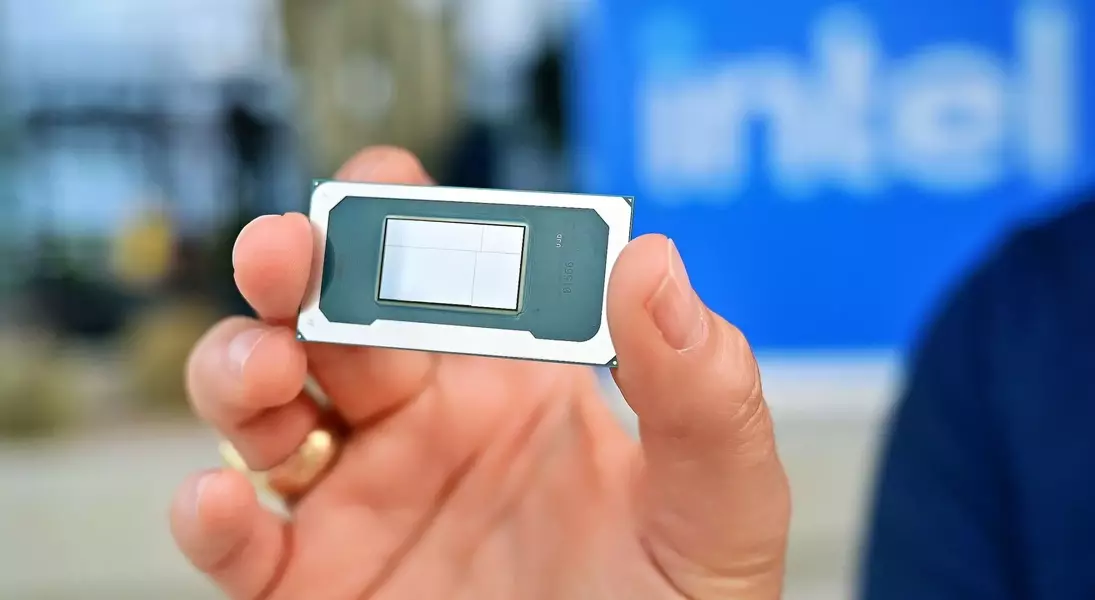
Unveiling the Future of Mobile Computing: Intel's Panther Lake
Panther Lake: Intel's Strategic Shift and Core Innovations
Intel's forthcoming Panther Lake chip is positioned as a critical product, aiming to demonstrate the company's renewed competitiveness against rivals like Apple, AMD, and Qualcomm. This new silicon, based on Intel's advanced 18A manufacturing process, embodies the vision for Intel to become a dominant force in chip production. Its introduction follows a period of strategic restructuring within Intel, driven by the need to innovate and lead in the ever-evolving technology landscape.
The Promise of Enhanced Performance and Efficiency
Panther Lake is designed to deliver a comprehensive upgrade across key performance metrics. Users can anticipate improved battery longevity, increased processing power, and significantly better integrated graphics for gaming and other demanding applications. A core objective behind its development was to make high-performance computing more accessible and efficient. Notably, Intel has engineered three distinct variations of this chip to cater to a broader range of devices, from ultra-portable machines to more robust performance-oriented laptops, effectively replacing both Lunar Lake and Arrow Lake-H architectures.
Revolutionizing Graphics and Gaming Experiences
Intel plans to offer Panther Lake in multiple CPU core configurations, featuring 8-core and 16-core options. Each variant will integrate four brand-new Xe3 graphics cores, with a high-end 16-core model boasting 12 Xe3 graphics cores and 12 ray-tracing units. This represents Intel's most powerful integrated graphics solution to date, providing a glimpse into the future of its desktop gaming GPU aspirations. Stephen Robinson, Intel's chief CPU architect, highlights that these new designs address a previous dilemma where users had to choose between battery life (Lunar Lake) and raw throughput (Arrow Lake).
Achieving Unprecedented Power Efficiency
Despite foregoing the integrated memory that made Lunar Lake efficient and reintroducing low-power E-cores, Intel asserts that Panther Lake will achieve up to a 10 percent reduction in overall power consumption compared to Lunar Lake. This enhancement is expected to translate into genuinely longer battery life during typical usage scenarios, including heavy applications like Microsoft Teams. This optimization is crucial for extending the utility of mobile devices without compromising performance.
Advancements in Core Architecture and Graphical Capabilities
Theoretical workload simulations further underscore Panther Lake's potential, showcasing its new Cougar Cove performance cores (P-cores) and Darkmont efficiency cores (E-cores) on the 18A process. These innovations promise a 40 percent reduction in power consumption for similar single-threaded tasks or a 50 percent boost in multi-threaded performance at comparable power levels, effectively surpassing Lunar Lake's capabilities. The new graphics architecture is also projected to deliver over 50 percent more power than its predecessors.
Tailored Performance Across Diverse Chip Variants
The actual performance benefits will vary depending on the specific Panther Lake chip variant. While the top-tier model with 12 Xe3 GPU cores is expected to deliver a substantial graphical uplift over Lunar Lake's 8 Xe2 GPU cores, the performance of models with fewer Xe3 cores remains to be seen. However, Intel fellow Tom Petersen has indicated that even the 12 Xe3 core version is suitable for handheld devices, potentially offering stable performance through a new \"Intelligent Bias Control v3\" feature. This system intelligently offloads gaming tasks to E-cores, allocating more power to the GPU where it is most needed.
Optimizing Gaming Performance with Intelligent Bias Control
Stephen Robinson elaborates that the increased reliance on robust E-cores for gaming tasks liberates power for the GPU, leading to a more consistent and fluid gaming experience. Additionally, Intel, in collaboration with Microsoft and Valve, is implementing cloud-based shader precompilation for games. This feature will automatically download optimized game shaders to devices, significantly reducing stutter and improving overall gameplay fluidity. Users will have the option to disable this feature if they choose.
Enhanced AI, Memory, and Multimedia Features
Panther Lake chips will also incorporate an upgraded Neural Processing Unit (NPU) for AI tasks, offering slightly improved performance while consuming less space and cost. The chips will support up to 96GB of memory, including modular LPCAMM memory, raising questions about its adoption by laptop manufacturers. An updated image processing unit will feature AI-driven noise reduction and local tone mapping for webcams, along with a media engine capable of 10-bit AVC and AV1 encoding and decoding, plus support for several Sony XAVC codecs.
Configuration Differences and Manufacturing Insights
While specific product names and detailed performance nuances are yet to be announced, early insights reveal key differences among the 8-core, 16-core, and 16-core/16 Xe-core configurations. Lower-end models will feature two types of CPU cores, while higher-end versions support faster memory. The addition of eight extra Xe3 cores comes at the cost of eight PCIe lanes. Importantly, Thunderbolt 5 is not integrated directly into the controller, though it may be supported externally. A significant aspect of Panther Lake's production is that not all components are manufactured internally; the compute tile is on Intel 18A, while the platform controller tile and the 12-core Xe3 GPU are produced externally.
Panther Lake: Production and Future Outlook
Intel had previously committed to shipping the initial Panther Lake SKUs later this year, with more variants to follow in the first half of 2026. The company confirms that Panther Lake is currently in production and on track to fulfill customer orders, aiming to become a widely adopted PC platform. Intel's Arizona Fab 52 is fully operational and is set to achieve high-volume production using the Intel 18A process later this year, signaling a robust future for Intel's manufacturing capabilities.